SCH4U - Chemistry 12 (2024-25) - A
SCH4U-25A
2-3B: Properties of Organic Compounds
Description
In this activity you will learn about the different properties of organic compounds and how these properties relate to the composition and structure of the compounds.
Page content
A. Properties of Organic Compounds
The physical and chemical properties of any compound are directly related to its elemental composition as well as its physical structure. We learned earlier how the individual components of an atom and the bonds between atoms affect the properties of different types of solids, in this lesson we will explore how the properties of the different classes of organic compounds are affected by the size of the compound, the nature of the atoms within them as well as their physical structures.
B. Melting and Boiling Points
The melting and boiling points of organic compounds are largely determined by the intermolecular forces that hold together the molecules within them. Stronger intermolecular forces correspond to higher melting and boiling points. Intermolecular forces include dipole-dipole interactions, hydrogen bonding and London dispersion forces, which have varying degrees of strength. When a substance melts, it changes state from a solid to a liquid, and when it boils, it changes from a liquid to a gas. During these changes of state, the molecules that make up the substance move away from each other. For molecules within a substance to move away from each other, the intermolecular forces holding them together must be overcome, the more polar a molecule is, the stronger the intermolecular forces will be. Keep this in mind when comparing the relative melting and boiling points of different classes of organic compounds, especially in relation to hydrogen bonding, which we learned is the strongest of the intermolecular forces we explored.
Hydrocarbons
Hydrogen and carbon have very similar electronegativity values (H = 2.20, C = 2.55), which means the nature of the bonds between them are non-polar. The intermolecular forces holding them together are therefore relatively weak and for this reason, hydrocarbons tend to have low melting and boiling points. In unit one, we learned that London dispersion forces increase as the size of a molecule increases. Looking at hydrocarbons, we can see how this plays out: as the length of the carbon chain of a hydrocarbon increases, so do its melting and boiling points, for example, methane (with only one carbon atom) has a melting point of -182 ºC and a boiling point of -162 ºC, whereas decane (with ten carbon atoms) has a melting point of -30 ºC and a boiling point of 174 ºC. This trend can be seen with most organic compounds within a class, where as the molecules increase in size so do their melting and boiling points.
Alcohols
Lets consider the structure of alcohols, looking only at the functional group they contain, a hydroxyl group (-OH). The hydroxyl group contains an O-H bond which is quite polar, and therefore alcohols are polar molecules. In fact, the O-H bond has a large enough difference in electronegativity to allow for hydrogen bonding, which is a very strong intermolecular force. As a result, alcohols require a large amount of energy to separate molecules from each other. For a clear example of how intermolecular forces affect the properties of a compound simply compare the boiling points of an alcohol and an alkene with the same number of carbons. 2-propanol, a 3-carbon alcohol has a boiling point of 82.6 ºC, whereas the corresponding alkane, propane, has a boiling point of -42.6 ºC.
Ethers, Aldehydes & Ketones
Ethers, aldehydes and ketones, like alcohols are polar molecules. All three of these classes have a the C-O bond, which has an electronegativity difference (ΔEN) of 0.89 (3.44-2.55). The polarity of this bond is less than that of an O-H bond therefore, the intermolecular forces between ether, aldehyde and ketone molecules are less than those between alcohol molecules but stronger than for hydrocarbons. As a result, all three of these classes have lower boiling and melting points than alcohols of the same size but higher than hydrocarbons of the same size.
Carboxylic Acids and Esters
Carboxylic acids are defined by the presence of both a C-O bond as well as an O-H bond, both of which are polar groups. As a result, carboxylic acids are very polar molecules. This polarity results in higher melting and boiling points than hydrocarbons with the same number of carbons. Esters on the other hand, also have two polar groups, both of which are C-O bonds. The C-O bond is less polar than the O-H bond and as a result, esters tend to have lower boiling and melting points than similar carboxylic acids, but higher boiling and melting points than similar hydrocarbons.
Amines & Amides
Amines and Amides all contain nitrogen molecules, which are bound to either carbon or hydrogen atoms. The ΔEN for the N-C bond is 0.49 (3.04 - 2.55), while for the N-H bond is 0.84 (3.04 - 2.20), as a result, amines and amides that have more N-H bonds have higher boiling and melting points than those with more N-C bonds. In other words, primary amines and amides have higher boiling and melting points than similar secondary and tertiary amides due to stronger intermolecular forces caused by more hydrogen bonding.
C. Solubility
When considering the solubility of organic compounds, you should simply remember the rule that like-dissolves-like. In other words, polar compounds are soluble in polar solvents and insoluble in non-polar solvents. Likewise, non-polar compounds are soluble in non-polar solvents and insoluble in polar solvents. There is also a third possibility when considering solubility which falls in between soluble and insoluble which is known as semi-soluble. If a compound is soluble in a solvent, this means that when the two are mixed, they will combine in such a way that there is an even distribution of both compounds within the solution, if they are insoluble, two separate layers will form, as you see when you mix oil and water together.
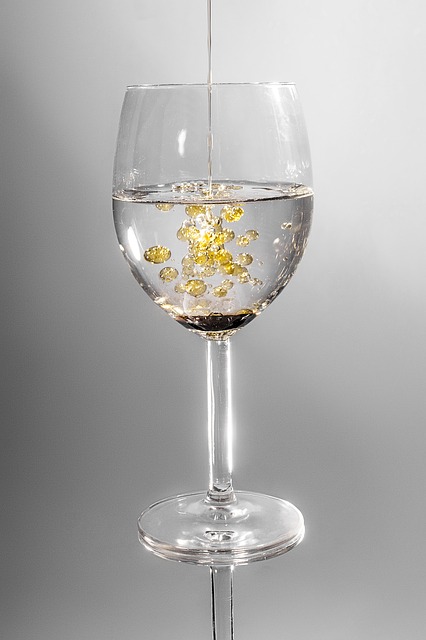
When considering the solubility of compounds in water, we must first consider the nature of water. Water is a polar molecule that allows for hydrogen bonding between its molecules, as a result, compounds which are polar will tend to be soluble in water; furthermore, compounds that allow for hydrogen bonding will be especially soluble in water. For example, primary amines and amides are more soluble in water than secondary or tertiary molecules due to a higher degree of hydrogen bonding.
For organic compounds that have polar groups, as the molecules become larger (as the parent carbon chains or rings become longer) the impact of the polar group is lessened. Therefore, for some organic compounds, such as alcohols, they are very soluble in water when they are smaller and become less soluble as they become longer. As you saw in the lab, ethanol, a two carbon chain compound is completely soluble in water, whereas pentanol, a five carbon compound is only semi-soluble, and decanol, a 10 carbon compound is insoluble in water.
D. Summary
- Melting and boiling points are related to the strength of intermolecular forces between molecules of a compound
- Polar functional groups cause higher melting and boiling points
- As the length of the parent carbon chain increases, so do the melting and boiling points
- Solubility is related to the nature of the solvent.
- If the solvent is polar, then polar compounds will dissolve in it, and non-polar compounds will not
- If the solvent is non-polar, then non-polar compounds will dissolve in it and polar compounds will not
- The polar nature of a functional group is diminished as the parent chain of an organic compound grows in length